

St. Augustine Sod in Jacksonville: A Practical Buying Guide
Planning to buy St. Augustine sod for your Jacksonville home? Before placing an order, it helps to know which variety suits your yard, how much sod you need, what quality signs to check, and when to arrange delivery. These details can make the difference between a smooth lawn project and an expensive do-over.
St. Augustine grass is a popular choice for Florida lawns because it grows well in warm weather and produces thick, green coverage. However, buying the right sod takes more than choosing grass that looks healthy. Here is what Jacksonville homeowners should consider before making a purchase.
1. Choose the Right St. Augustine Grass Variety
Not all St. Augustine grass is the same. Different varieties can vary in shade tolerance, growth habits, and maintenance needs. Your yard’s conditions should guide your choice.
Before buying, consider:
- Sunlight: Check how many hours of direct sunlight your yard receives. Some varieties tolerate partial shade better than others, but deep shade can still cause problems.
- Foot traffic: Think about whether children, pets, or visitors will regularly use the lawn.
- Maintenance: Consider how much time you can spend mowing, watering, and caring for your grass.
Ask your sod supplier which varieties are available and which may suit your property. Choosing based on your yard’s needs is more useful than selecting a variety simply because it looks good at the time of purchase.
2. Check Sod Quality Before You Buy
When searching for St. Augustine sod for sale in Jacksonville, FL, pay attention to the condition of the grass and its roots. Fresh, healthy sod gives your lawn a better starting point.
Look for these signs before placing your order:
- Consistent green colour: Avoid sod with widespread yellowing, large dead patches, or signs of disease.
- Healthy roots: The soil and roots should hold together rather than fall apart easily.
- Freshness: Sod should not look dry, brittle, or badly wilted.
- Few weeds: Check for unwanted plants and visible signs of pests.
- Reliable handling: Ask how recently the sod was harvested and how it will be stored before delivery.
It is also worth asking about the variety, harvesting schedule, and delivery arrangements. These simple questions help you understand what you are paying for.
3. Calculate How Much Sod Your Yard Needs
Ordering the correct quantity helps you control costs and avoid unnecessary waste. Start by measuring the lawn area you want to cover.
For a rectangular yard, multiply the length by the width to calculate the square footage. For an irregular yard, divide the space into smaller sections, measure each one, and add the areas together. Subtract spaces that will not receive sod, such as patios, walkways, and garden beds.
Consider ordering a small amount of extra sod for cutting around edges and fitting irregular areas. Your final quantity will depend on the yard’s shape and the installation plan.
If you are unsure about measurements, ask your sod supplier or landscaping professional to assess the area before confirming the order.
4. Understand Sod Pricing and Delivery
The cost of St. Augustine sod depends on factors such as the variety, quantity, delivery distance, and preparation required. The lowest price per square foot may not represent the lowest overall project cost if delivery or ground preparation is charged separately.
Before buying, ask:
- Is the price calculated by square foot, pallet, or another unit?
- Is delivery included in the quoted price?
- Are there minimum order quantities?
- How soon can the sod be delivered?
- Will the ground need additional preparation before installation?
Arrange delivery close to your planned installation date. Fresh sod can dry out quickly after harvesting, especially during hot weather, so leaving it stacked for too long can affect its condition.
5. Prepare Your Yard Before the Sod Arrives
Jacksonville’s sandy soil, summer heat, and heavy rainfall can affect how a new lawn establishes itself. Before delivery, remove old grass and weeds, clear debris, level the ground, and address areas where water collects.
Good preparation gives roots a better chance to establish. Once the sod is installed, follow an appropriate watering schedule to keep the soil moist while the roots develop.
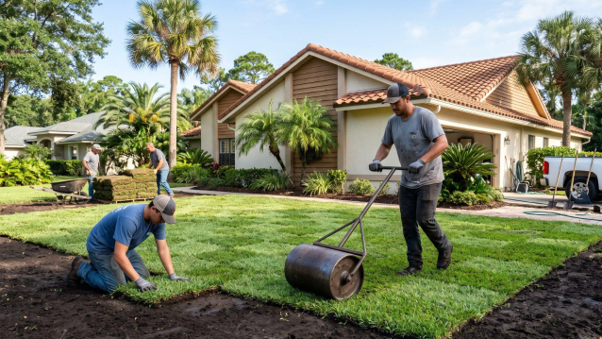
Working with experienced landscaping contractors in Jacksonville, FL, can make planning, ground preparation, and delivery coordination easier. Professional lawn sod installation in Jacksonville can also help ensure the pieces fit closely together and the finished lawn has an even appearance.
In Closing:
Choosing sod should not feel like guesswork. Coastal Serenity Landscapes works with Jacksonville property owners to plan lawns around their yard size, soil conditions, sunlight, and outdoor needs. From sod supply and delivery to careful installation, we focus on the details that give your new grass a sound starting point.
Ready to buy St. Augustine sod for your property? Connect with Coastal Serenity Landscapes to discuss your lawn, understand your options, and plan your next steps. With the right sod and a well-prepared yard, you can move closer to a green lawn that makes coming home feel even better.


